
Applications
Eight places stonecould not go.
8 applications
Each of these exists for a concrete reason: weight, curvature or the absence of joints. They are not catalogue ideas — they are consequences of the material.
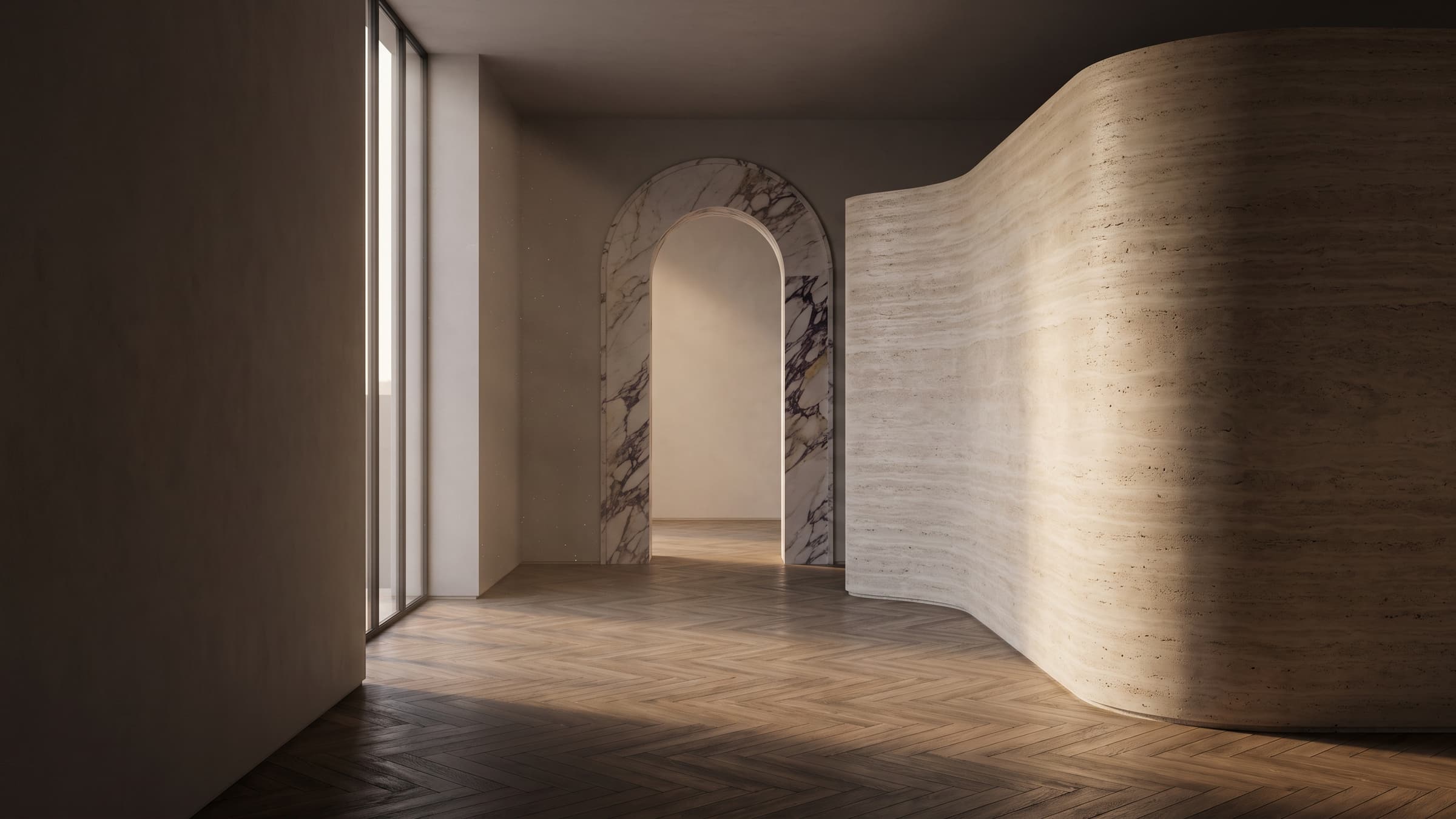
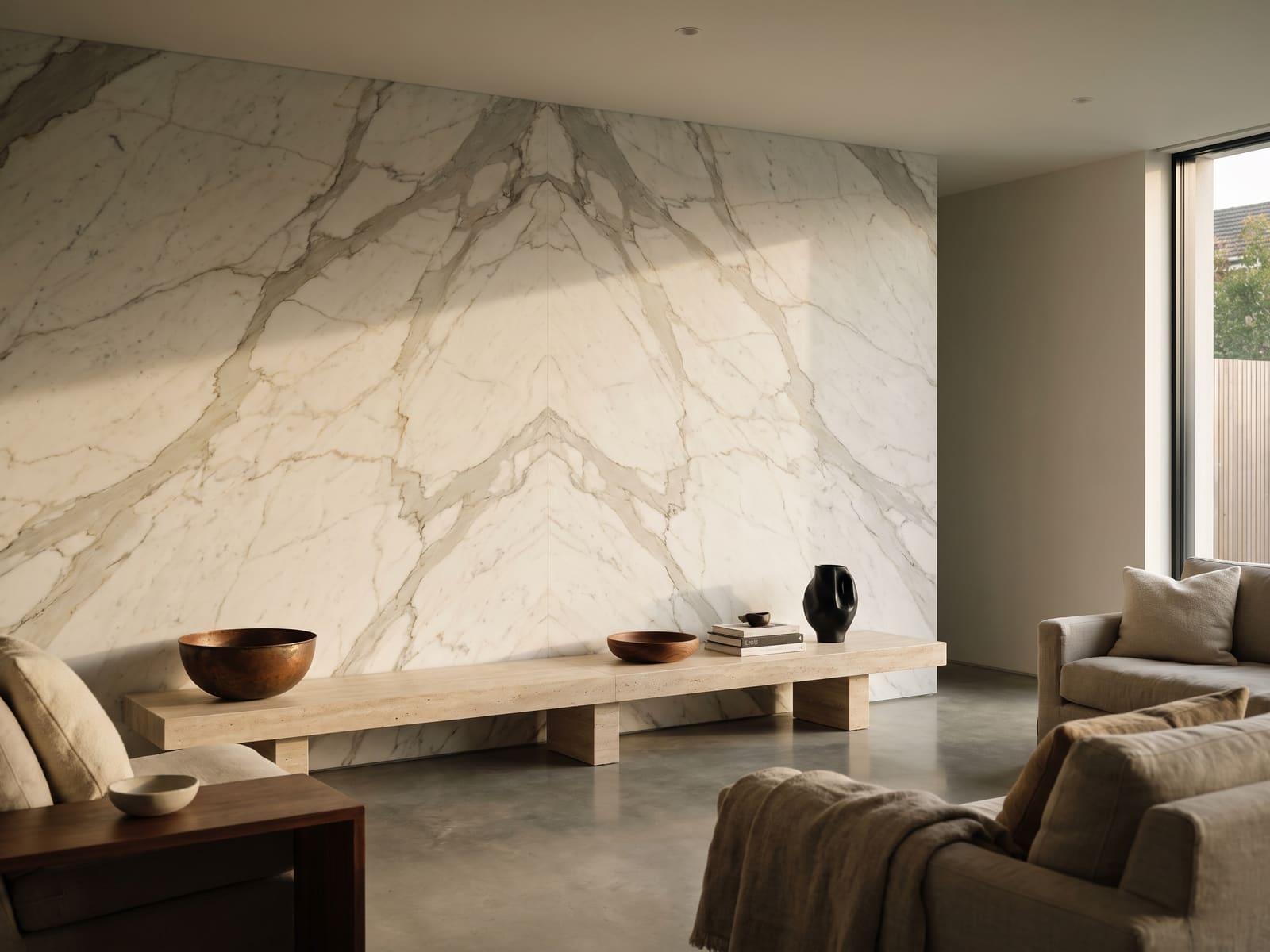
Feature walls
Vast uninterrupted planes, no heavy anchoring.
A twelve-metre continuous plane with no vertical joint. Traditional stone would need its own structure; at 1 mm it bonds to the partition already there.
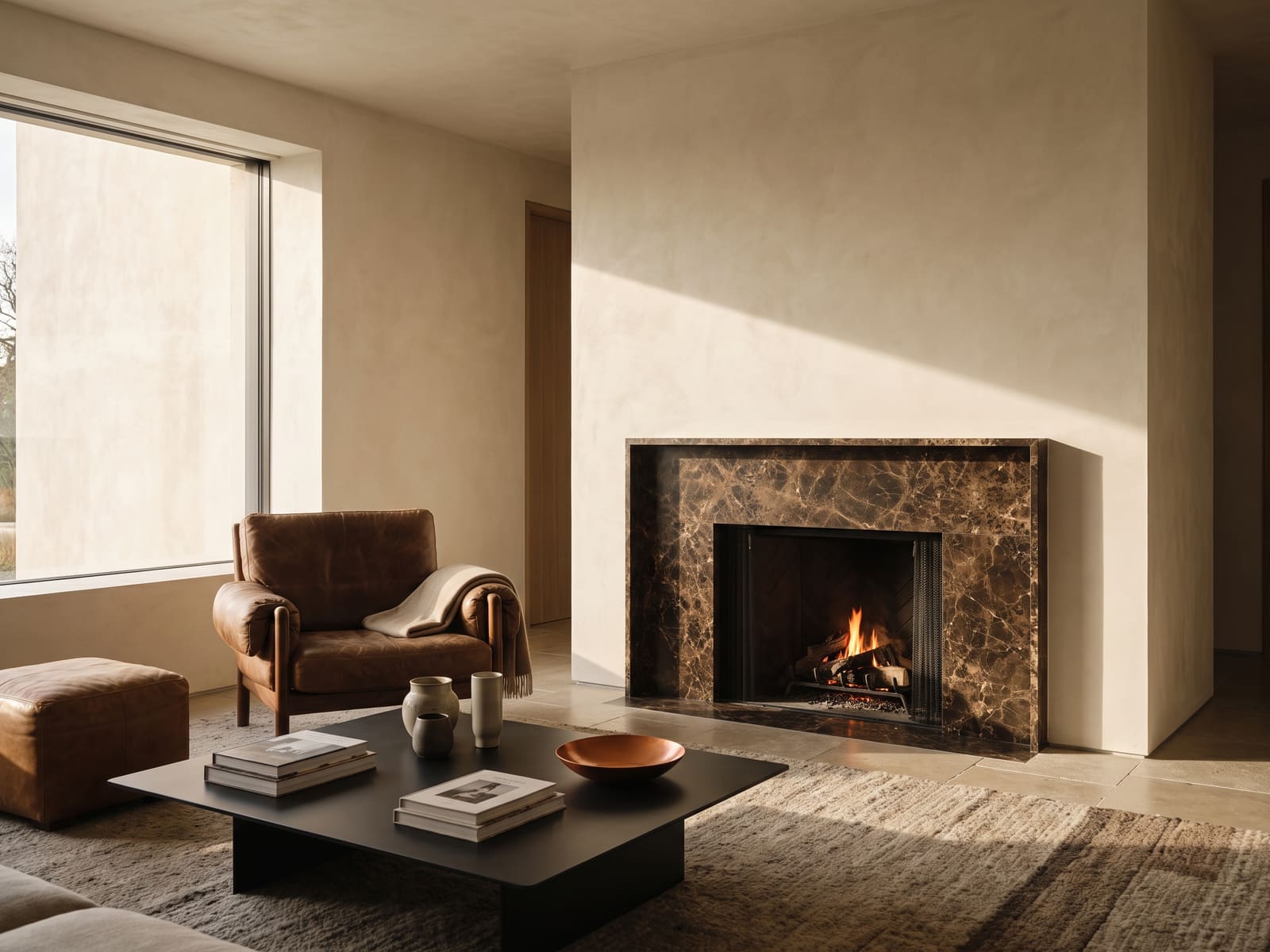
Fireplaces
Thin stone over the structure already there.
A fireplace is usually already built and clad. Millimeter goes over what exists — no demolition, no recalculated loads, no lost opening.
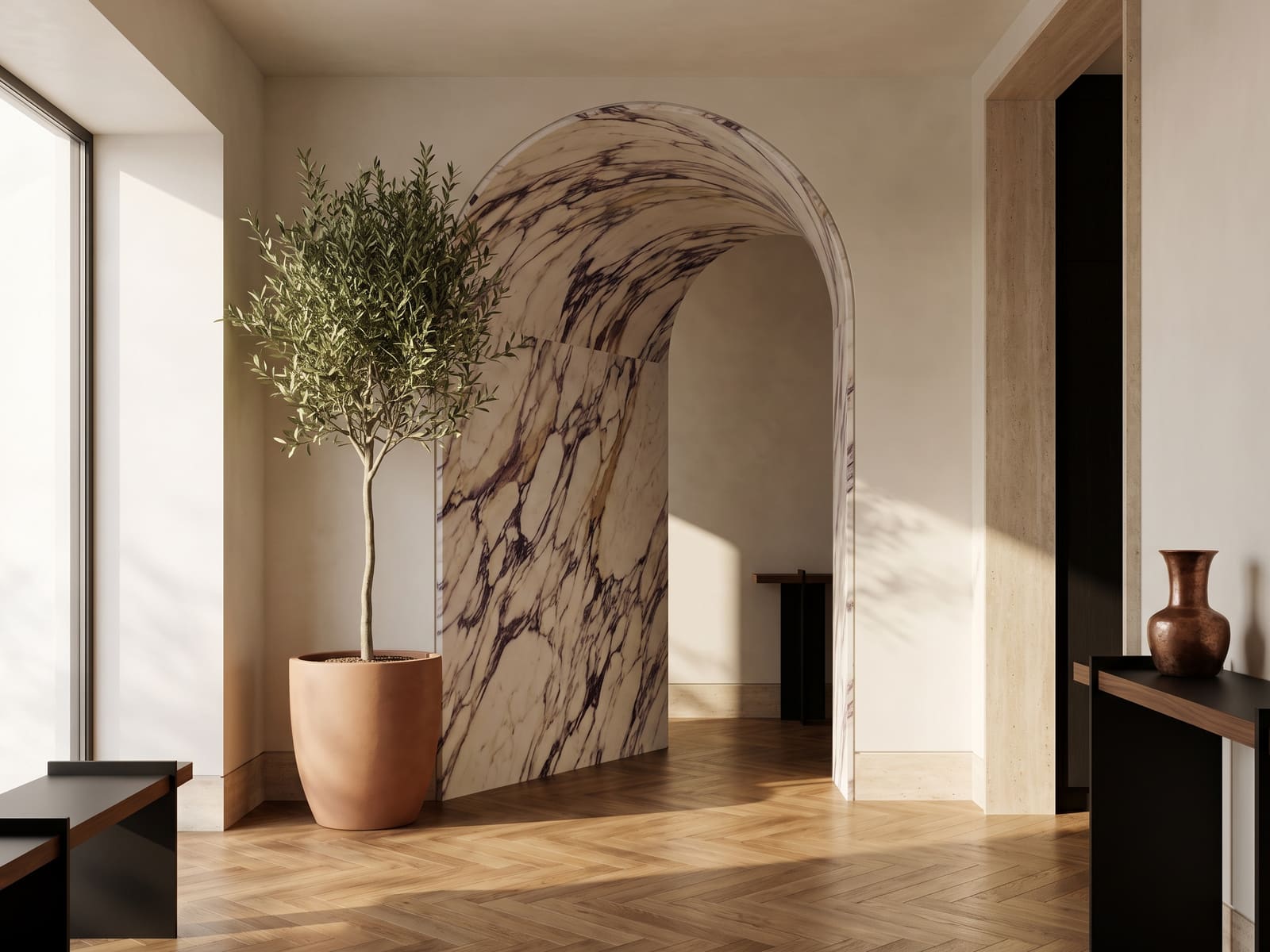
Architectural elements
Arches and columns clad in one continuous curve.
Arches, vaults and columns clad in a single piece that follows the geometry. The veining runs through the curve instead of breaking at every voussoir.
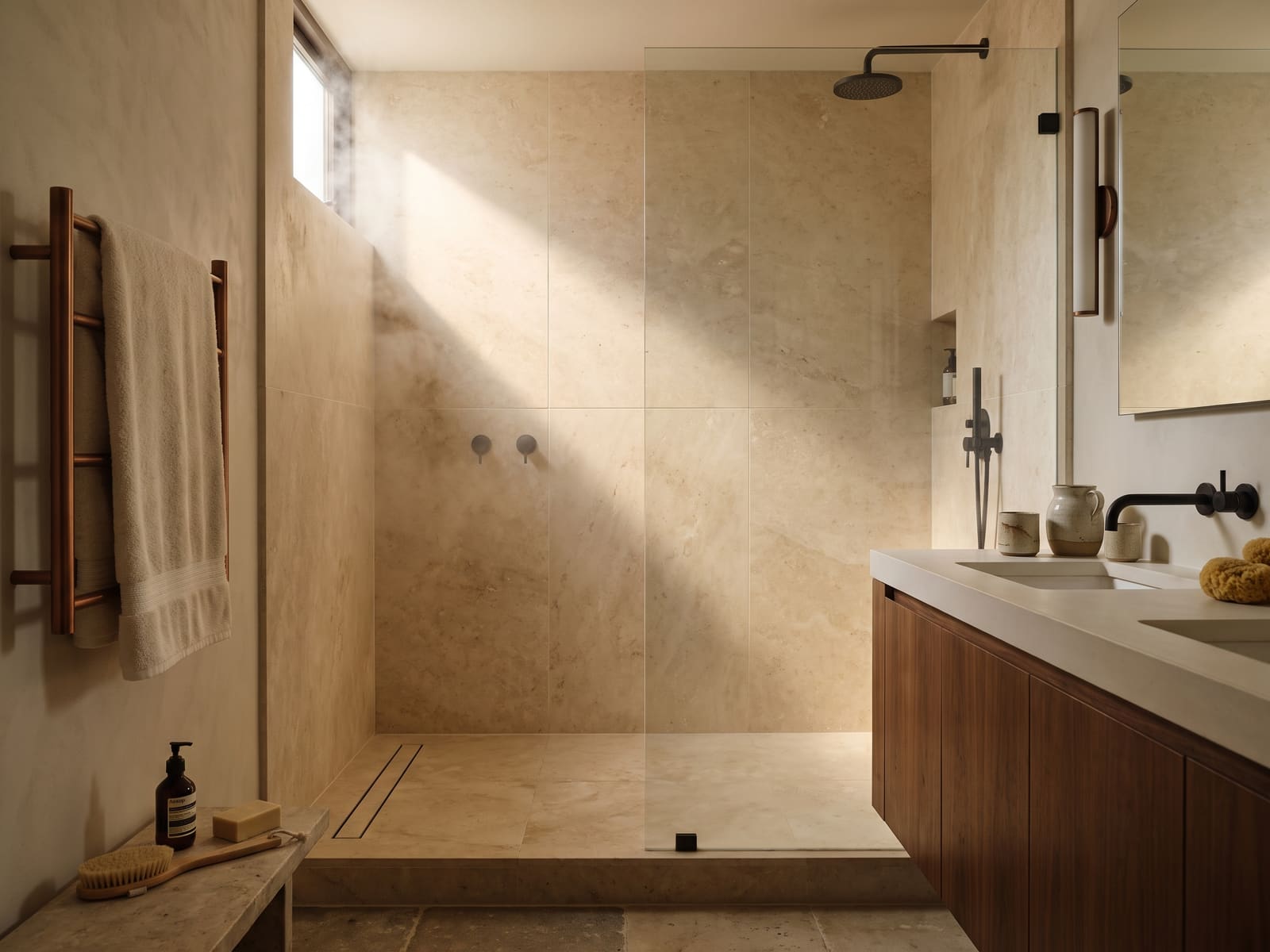
Walking showers
Fewer joints: less seepage, less silicone.
Fewer joints means less silicone, less seepage and less maintenance. In a built shower that is the difference between ten years and two.
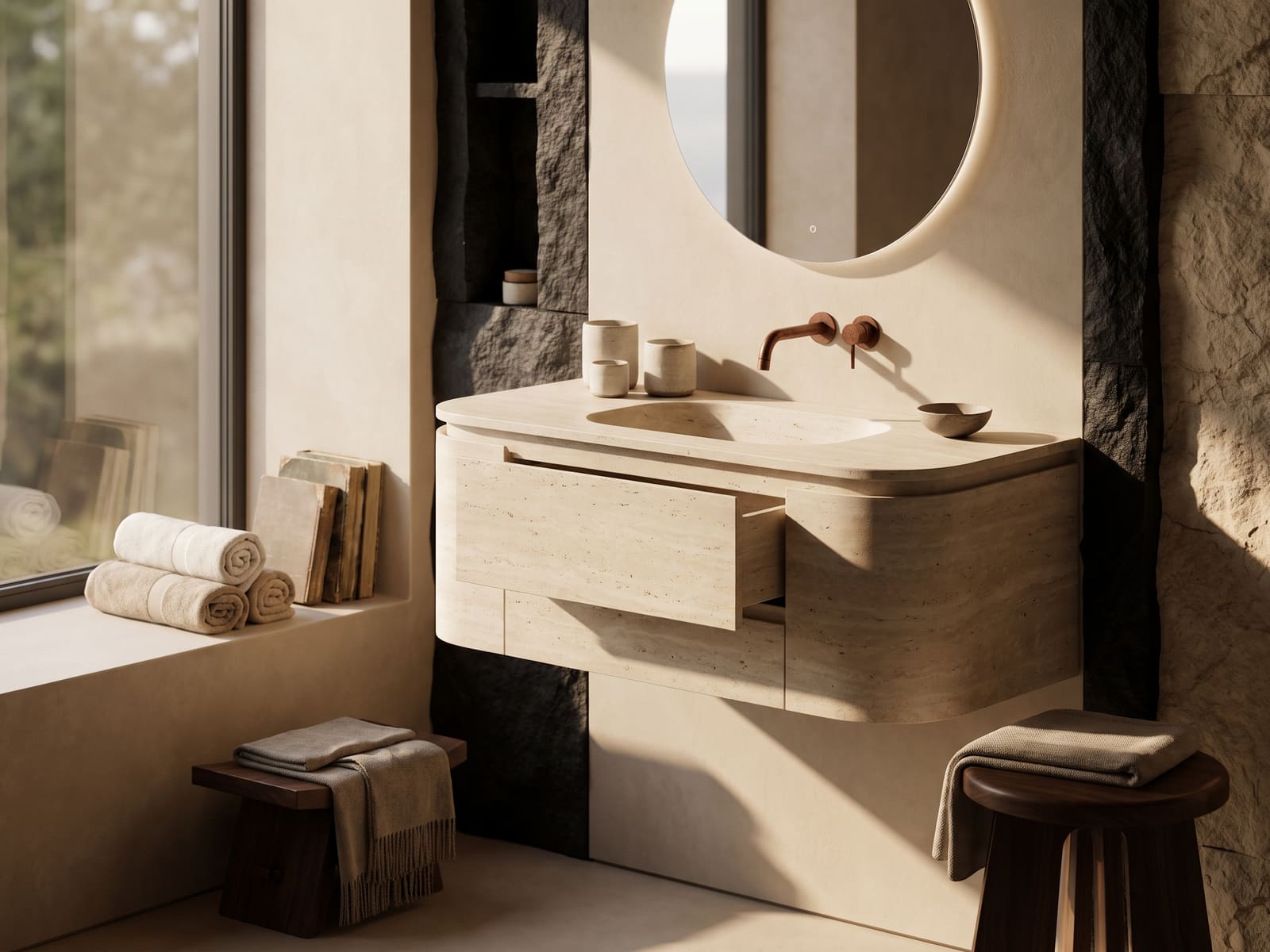
Custom furniture
Stone fronts that actually open and close.
Fronts, doors and drawers in stone that open and close on standard hardware, because they weigh what a veneered panel weighs.
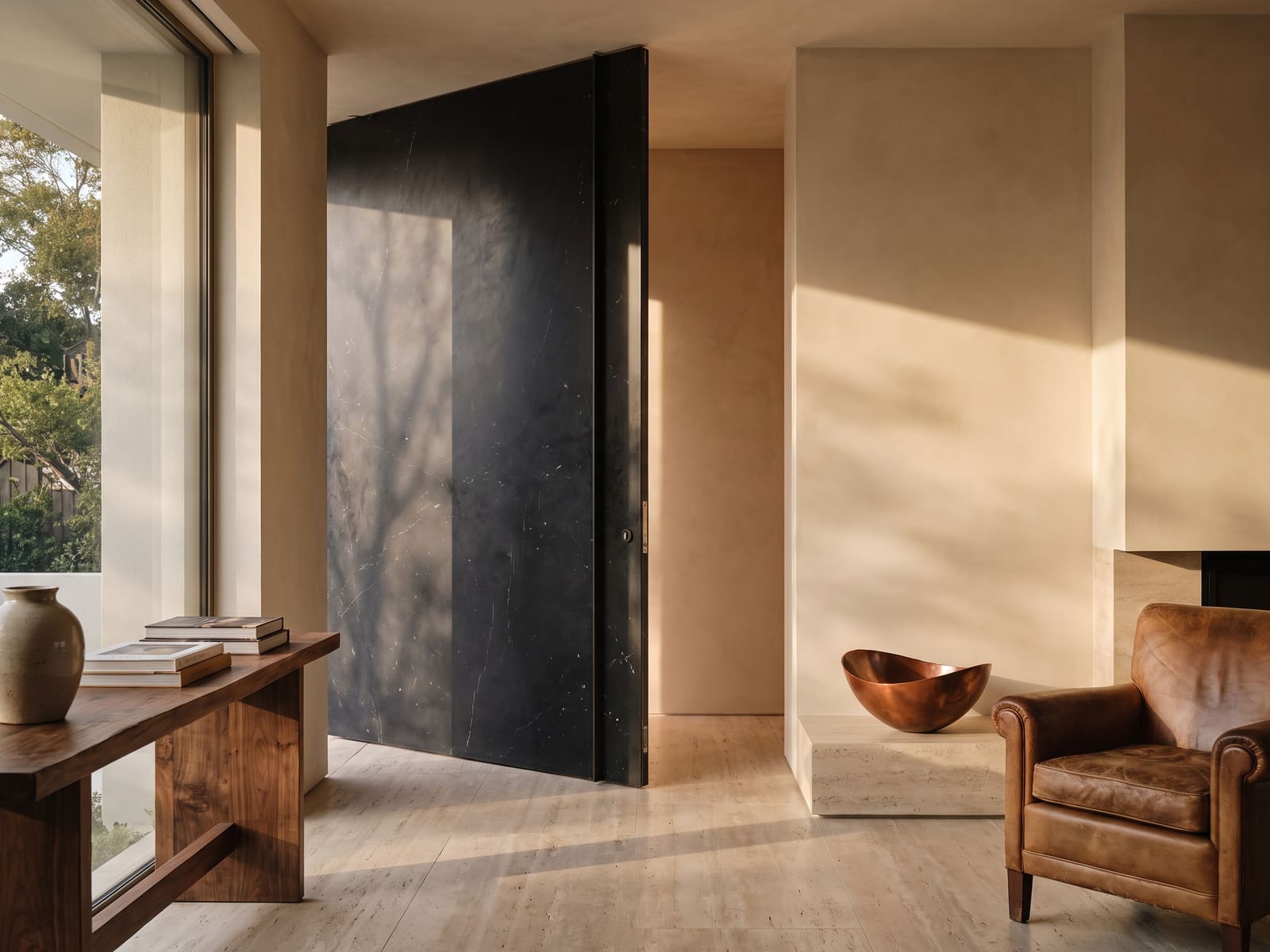
Doors & panels
Weight compatible with standard hardware.
A door leaf clad in 5 mm marble sits inside the load range of a standard hinge. With 2 cm of stone, it does not.
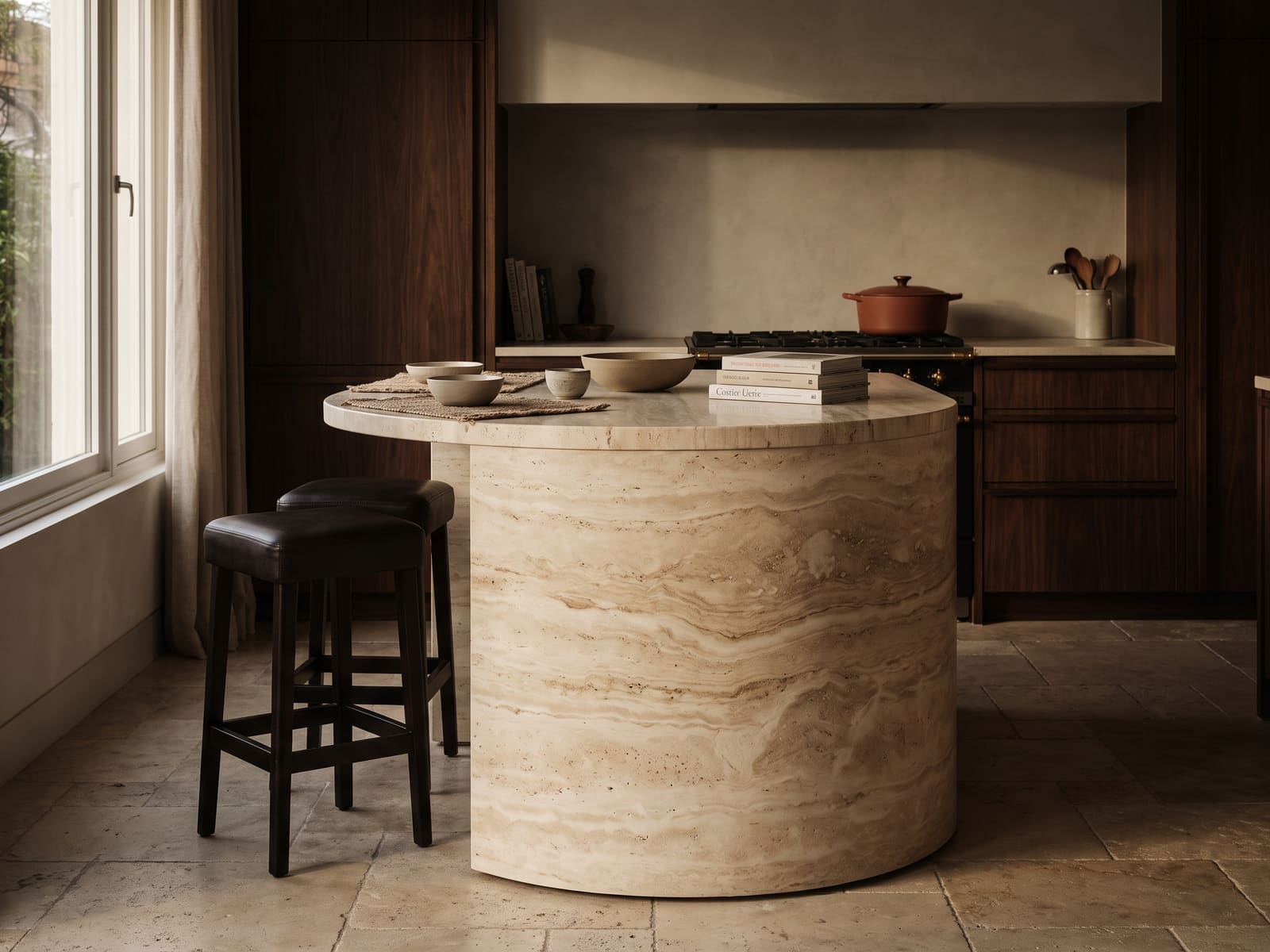
Curved surfaces
A real curve, not a cut that fakes one.
The application that defines the product. A real continuous curve: no other natural material solves it today without cutting.
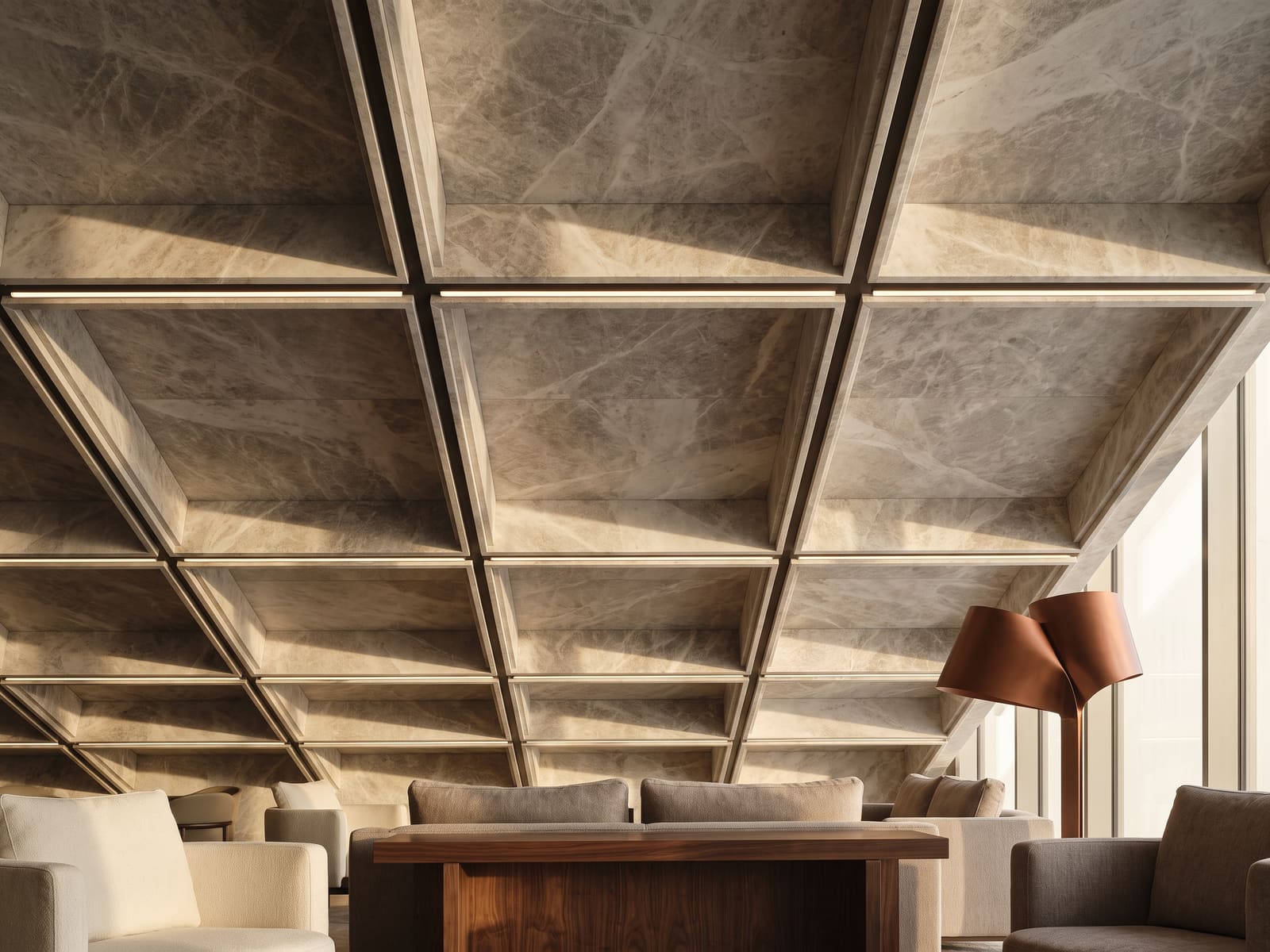
Ceilings
Only viable because it weighs under 5 kg/m².
Stone overhead. It is only defensible, structurally and legally, because the square metre weighs under five kilos.
Your applicationnot on the list?
It is probably still possible. The limit is set by the construction detail, and we review that with you before there is a quote.